If you wear contact lenses, there is a good chance you have showered in them. You are not alone — studies suggest that 60 to 80 percent of contact lens wearers routinely keep their lenses in while bathing, and a 2015 CDC report found that 85 percent of wearers engage in at least one behavior that puts them at risk for a serious eye infection. [1] Most people assume the risk is minimal. After all, it is just tap water — the same water you drink, brush your teeth with, and wash your face in every day.
That assumption is dangerously wrong. And the consequences, as one British woman discovered, can be life-altering.
The Case That Changed Everything
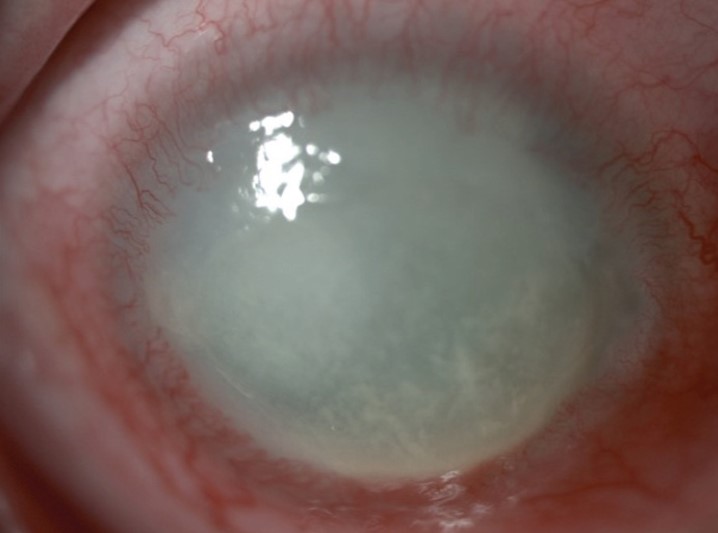
In 2015, Marie Mason — a 54-year-old contact lens wearer from the United Kingdom — noticed what felt like a grain of sand in her left eye after showering with her extended-wear lenses. What followed was a five-year medical ordeal that included multiple rounds of medication, hourly eye drops, and three cornea transplants. The diagnosis: Acanthamoeba keratitis, a parasitic infection caused by a microscopic organism commonly found in tap water, shower water, lakes, and even well water. After five years of treatment, Mason's left eye was surgically removed. She now wears a prosthetic. [2]
Mason's case, reported by Ophthalmology Times in 2022, is extreme — but it is not an outlier. Professor John Dart of University College London estimates that 150 to 200 people in the UK alone contract Acanthamoeba keratitis each year, and nearly half suffer substantial vision loss. In the United States, contact lens wear accounts for up to 95 percent of all AK cases. [3]
What Is Acanthamoeba Keratitis?
Acanthamoeba is a free-living amoeba found in virtually all water sources: municipal tap water, well water, lakes, rivers, hot tubs, and even bottled water. In most circumstances, it is harmless — your intact cornea provides an effective barrier. But contact lenses change the equation in three critical ways:
First, soft contact lenses absorb water and can trap Acanthamoeba organisms directly against the corneal surface for extended periods. Second, water causes soft lenses to change shape and swell, creating micro-abrasions on the cornea as the lens shifts and sticks. Third, those tiny scratches provide a direct entry point for the parasite to penetrate the corneal tissue. [4]
Once established, Acanthamoeba keratitis is extraordinarily difficult to treat. The organism forms cysts — dormant, hard-shelled structures — that are resistant to most antimicrobial agents. Treatment typically involves months of hourly antiseptic eye drops, and even with aggressive therapy, the infection can persist for a year or more. In severe cases, a corneal transplant is the only option. Some patients, like Marie Mason, lose the eye entirely.
The CDC Is Clear: No Water, Period
The Centers for Disease Control and Prevention does not mince words on this topic. Their guidance is unambiguous: remove contact lenses before any water activity — including showering, swimming, using a hot tub, or even washing your face. [1] If water does come into contact with your lenses, the CDC recommends removing them as soon as possible and either discarding them (if disposable) or thoroughly cleaning and disinfecting them overnight.
The problem is that most contact lens wearers either do not know this guidance exists or find it impractical to follow. If you cannot see well enough to navigate your shower without correction, removing your lenses before stepping in feels like trading one risk for another — the risk of infection versus the risk of slipping on a wet tile floor because you cannot see the shampoo bottle.
This is where most eye care conversations stop. But it does not have to be.
The Simplest Fix: Prescription Shower Glasses
Here is the solution that most opticians never think to mention: get a dedicated pair of prescription glasses made in your actual Rx, just for the shower. Not a generic reader off a drugstore rack — a real pair of glasses built to your prescription so you can see as clearly in the shower as you do anywhere else. It sounds almost too simple, but it solves the problem completely. Remove your contacts before you step in, put on your shower glasses, and you can see clearly without exposing your lenses — or your corneas — to water.
This is an important distinction. Off-the-shelf reading glasses and products like ShowerSpecs — anti-fog readers that were featured on Oprah's Favorite Things list — only come in generic magnification strengths. They work if all you need is a little help reading shampoo labels. But if you have a real prescription — especially one with astigmatism, different powers in each eye, or anything beyond basic magnification — a reader will not give you the vision you actually need. You will still be squinting, still fumbling, and still at risk of slipping because you cannot see properly.
At The Last Optical, we make shower glasses in your exact prescription — including complex Rx's with astigmatism correction, prism, or significantly different powers between eyes. The ideal shower pair does not need to be expensive or fashionable. In fact, the simpler the better:
Plastic frames — not metal — since they will not corrode or rust from daily water exposure. Basic plastic lenses without premium anti-reflective coatings, which can degrade with repeated water and steam contact. A polycarbonate or CR-39 lens in an affordable plastic frame is all you need. Many of our patients keep their previous prescription pair for exactly this purpose when they upgrade to new frames — and we are happy to help you repurpose an old frame with updated lenses.
For swimmers, prescription swim goggles provide the same protection in the pool — and again, we can help you find the right option for your prescription rather than settling for an off-the-shelf approximation.
Beyond the Shower: A Complete Water Safety Checklist
Showering is the most common water exposure for contact lens wearers, but it is not the only one. Here is a complete list of situations where you should always remove your contacts first:
Swimming pools and hot tubs — chlorine does not kill Acanthamoeba. In fact, hot tubs are particularly dangerous because the warm temperature accelerates microbial growth. Use prescription swim goggles instead.
Lakes, rivers, and oceans — natural bodies of water have the highest concentrations of Acanthamoeba and other waterborne pathogens. Never swim in open water with contacts.
Water parks and splash pads — the combination of recycled water and high bather loads creates ideal conditions for contamination.
Face washing — even brief tap water exposure during face washing can introduce organisms to your lenses. Remove contacts first, or switch to daily disposables and discard them after any accidental water contact.
Daily Disposables: A Safer Alternative
If you are not ready to give up contacts entirely, consider switching to daily disposable lenses. Research published in the Review of Optometry found that daily disposables are four times less likely to harbor Acanthamoeba than reusable lenses, because they are discarded before biofilm — the sticky layer where parasites thrive — has time to accumulate. [5] A separate study found that 6 percent of reusable contact lens cases tested positive for Acanthamoeba contamination.
Daily disposables are not a license to shower in your contacts — the CDC guidance still applies — but they significantly reduce your baseline risk if accidental water exposure does occur.
What We Tell Our Patients
At The Last Optical, we have this conversation with contact lens wearers regularly, and the reaction is almost always the same: surprise that the risk is real, followed by relief that the solution is so straightforward. A dedicated shower pair — made in your real prescription, not a generic reader — costs a fraction of what most people spend on their primary eyewear, and it eliminates the single most common source of water exposure for contact lens wearers.
We will fit you with an affordable, water-friendly frame and lenses built to your exact Rx — whether that is a simple single-vision script or something more complex with astigmatism or progressive power. Many of our patients pair this with a set of dry eye treatments — because if you have been showering in your contacts for years, there is a good chance your eyes could use some recovery time.
Your eyes are the only pair you get. A pair of real prescription shower glasses is the cheapest insurance policy you will ever buy — and unlike a drugstore reader, you will actually be able to see in them.
Sources:
[1] CDC — Healthy Habits: Keeping Water Away from Contact Lenses (2024)
[2] Ophthalmology Times — Woman Loses Eye After Showering While Wearing Contact Lenses (Oct 2022)
[3] PMC3972779 — Acanthamoeba Keratitis: An Update on Diagnostics, Therapeutics, and Outcomes
[4] CDC Contact Lens Risk Survey (CLRS), PMC5499971
[5] Review of Optometry — Acanthamoeba: A Primer for Contact Lens Practitioners
Concerned about your contact lens habits? Schedule a comprehensive eye exam at The Last Optical in Montgomery, NY, or contact us to ask about prescription shower glasses made in your exact Rx — not a generic reader, but real glasses you can actually see in.