If you have ever looked in the mirror and noticed that the skin beneath your eyes seems to sag a little more each year — giving you a perpetually tired appearance even after a full night of rest — you are not alone. Lower eyelid laxity is one of the most common signs of facial aging, affecting an estimated 78.3% of patients who visit ophthalmology practices for eyelid-related concerns. It happens because we naturally lose 3 to 8 percent of our skeletal muscle mass each decade after age 30, and the delicate muscles surrounding the eyes are among the first to show the effects.
For decades, the only meaningful treatment for sagging lower eyelids was blepharoplasty — surgical eyelid lifting that involves incisions, anesthesia, and weeks of recovery. It is an effective procedure for severe cases, but it comes with significant cost, downtime, and risk. Many patients with mild to moderate laxity are not candidates for surgery, do not want surgery, or simply cannot afford the weeks away from work and daily life that recovery demands.
That is why we invested in Lumenis OptiLIFT at The Last Optical's Dry Eye Spa — 77 Clinton St, Montgomery, NY 12549. OptiLIFT is a clinically validated, non-surgical device that tones and tightens the periorbital muscles using proprietary Dynamic Muscle Stimulation (DMSt) technology. It addresses both the cosmetic appearance and the functional consequences of lower lid laxity, and it does so without a single incision.
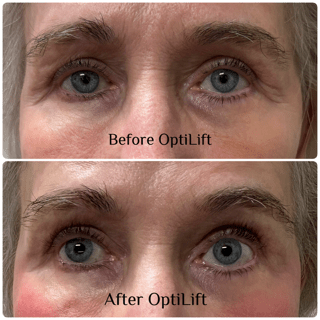
Before and after OptiLIFT treatment — visible improvement in lower eyelid tone and tightness after a four-session protocol (Courtesy of Eye Doctor MD)
What Is OptiLIFT and How Does It Work?
OptiLIFT is the first device of its kind to combine two modalities — Dynamic Muscle Stimulation and radiofrequency energy — in a single handpiece designed specifically for the periorbital area. It was developed by Lumenis, the same company behind the FDA-approved OptiLIGHT IPL system that we use for dry eye management.
The DMSt component works by delivering gentle electrical impulses to the muscles surrounding the lower eyelids. These impulses activate muscle contractions — essentially exercising the periorbital muscles in a controlled, targeted way. Dr. James Chelnis, an oculoplastic surgeon at Manhattan Face and Eye who led the clinical study on OptiLIFT, describes it as "a barre class for the eyelids." The goal is not to build bulky muscle, but to restore tone and tightness to muscles that have weakened over time.
The radiofrequency component penetrates deeper into the tissue layers, heating the dermal collagen to therapeutic temperatures. This triggers a natural wound-healing response that produces new collagen and elastin fibers over the following weeks. The result is firmer, smoother skin overlying the newly toned muscles — addressing both the muscular and dermal components of eyelid aging.
The Clinical Evidence
OptiLIFT is not a marketing claim. It is backed by clinical research. Dr. Chelnis's study, published in Clinical Ophthalmology in 2025, evaluated 30 patients with lower lid laxity and moderate-to-severe dry eye disease due to meibomian gland dysfunction. The results were striking:
75% or greater decrease in lower lid laxity — the sagging that gives eyes a tired, aged appearance was substantially reduced across the patient group.
70% improvement in blinking rate and quality — proper blinking is essential for distributing the tear film evenly across the eye surface. When the lower lid loses tone, blinking becomes incomplete, which worsens dry eye symptoms.
286% improvement in tear breakup time — this is a key clinical measure of tear film stability. A nearly threefold improvement indicates that the treatment fundamentally changes how well the eye surface retains moisture.
Perhaps most encouraging, the study found that measured improvements continued to build throughout the treatment course without hitting a plateau. Each session built on the results of the previous one, suggesting that even greater outcomes may be achievable with ongoing treatment.
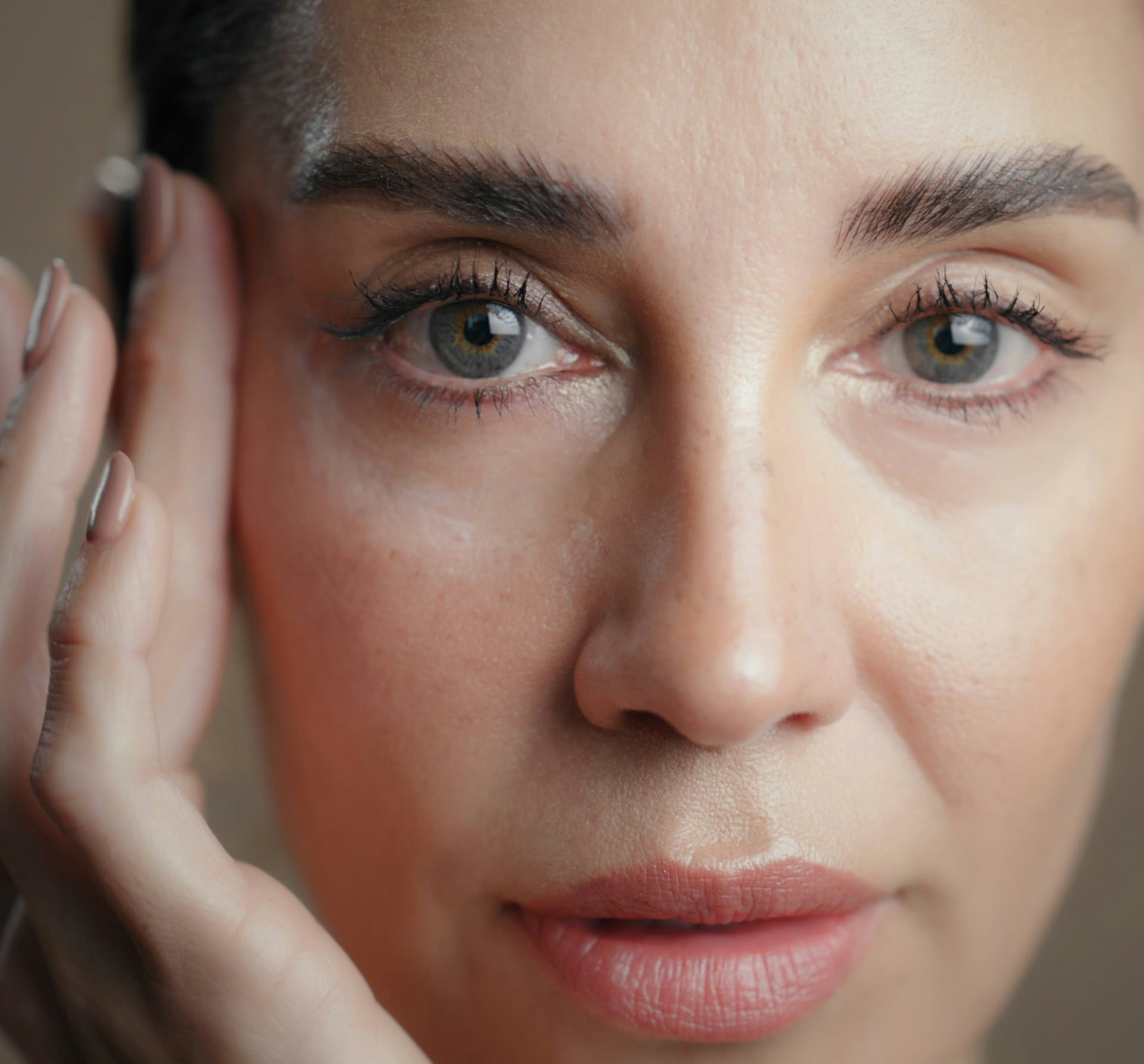
Periorbital rejuvenation — the delicate skin around the eyes responds to both muscle toning and collagen-stimulating treatments for a visibly lifted, refreshed appearance
OptiLIFT vs. Surgical Blepharoplasty: Understanding Your Options
Surgical blepharoplasty remains the gold standard for severe eyelid laxity, excess skin, and fat herniation that significantly obstructs vision or dramatically alters facial appearance. It is a well-established procedure with high satisfaction rates. But it is also a significant undertaking.
Lower blepharoplasty typically costs between $5,000 and $8,000 when you factor in surgeon fees, anesthesia, facility charges, and follow-up care. The procedure requires local or general anesthesia, involves incisions along the lower lash line or inside the eyelid, and carries risks including bleeding, infection, dry eye, asymmetry, and in rare cases, changes in eyelid position that require revision surgery. Recovery takes one to two weeks before patients can return to normal activities, and bruising and swelling may persist for several weeks beyond that.
OptiLIFT offers a fundamentally different approach for patients with mild to moderate lower lid laxity:
No incisions, no anesthesia. The treatment uses external electrical impulses and radiofrequency energy applied to the skin surface. There is nothing to cut, nothing to stitch, and nothing to heal.
No downtime. Each session takes approximately 14 minutes — seven minutes per side. Patients return to their normal activities immediately afterward. There is no bruising, no swelling, and no recovery period.
Significantly lower cost. At The Last Optical, OptiLIFT is $650 per session. A full four-session protocol totals $2,600 — a fraction of the cost of surgical blepharoplasty.
Dual benefit. Unlike surgery, which addresses only the cosmetic appearance of the eyelids, OptiLIFT simultaneously improves dry eye symptoms by restoring proper blinking mechanics and meibomian gland function. Surgery does not treat dry eye — and in some cases, can actually worsen it temporarily.
What to Expect During Treatment
The OptiLIFT protocol at The Last Optical consists of four sessions spaced one week apart. During each session, our trained technician applies the OptiLIFT handpiece along the inferior orbital rim — the bony ridge beneath your lower eyelids. The device delivers gentle electrical pulses that you will feel as a mild tingling or tapping sensation. Most patients find it comfortable and even relaxing.
The entire treatment takes about 14 minutes. There is no preparation required and no aftercare beyond your normal routine. Many patients schedule their sessions during a lunch break or between errands.
Results are often visible after just one or two sessions, with progressive improvement through sessions three and four. The muscle toning effect is cumulative — each treatment builds on the last, gradually restoring the firm, lifted appearance that time and gravity have diminished.
Who Is a Good Candidate?
OptiLIFT is ideal for adults who notice mild to moderate lower eyelid sagging and want to address it without surgery. You may be a particularly good candidate if you:
Notice that your lower eyelids appear droopy, puffy, or "tired" even when you are well-rested. Experience dry eye symptoms that have not fully responded to drops or other treatments. Have been told you might benefit from blepharoplasty but are not ready for surgery. Want to maintain or enhance results from previous cosmetic treatments around the eyes. Spend long hours at a computer and experience incomplete blinking — a common contributor to both dry eye and accelerated periorbital aging.
OptiLIFT is also an excellent option for patients recovering from Bell's palsy or other conditions that affect facial muscle tone, as it can help restore strength and function to weakened periorbital muscles.

Bright, youthful eyes without surgery — OptiLIFT restores muscle tone and stimulates collagen for natural-looking results
The Complete Lumenis Suite at The Last Optical
OptiLIFT is most powerful when combined with the other Lumenis technologies available at our Dry Eye Spa. Our full treatment suite includes:
OptiLIGHT IPL — the only FDA-approved IPL for dry eye management. Treats inflammation, reduces redness and rosacea, fades sun damage, and stimulates collagen in the skin surface. Read about the science behind OptiLIGHT.
OptiPLUS RF — dual-frequency radiofrequency that penetrates deeper tissue layers to liquify thickened meibum, restore gland function, and stimulate deep collagen production for firmer skin.
OptiLIFT DMSt + RF — the muscle toning and skin tightening treatment described in this article, targeting lower lid laxity and impaired blinking.
Together, these three technologies address dry eye disease and periorbital aging from every angle — surface inflammation, deep gland dysfunction, collagen loss, and muscle weakening. It is a comprehensive approach that very few practices in the Hudson Valley can offer, and it reflects our commitment to providing the most advanced care available.
Book Your OptiLIFT Consultation
If you are noticing lower eyelid sagging, puffiness, or a tired appearance around your eyes — or if you have been considering blepharoplasty but want to explore non-surgical options first — we invite you to schedule a consultation at The Last Optical. Our team will evaluate your eyelid tone, discuss your goals, and recommend a treatment plan tailored to your needs.
Call us at (845) 606-4220 or visit us at 77 Clinton St, Montgomery, NY 12549. Walk-ins are always welcome.
Your eyes deserve more than drops. They deserve a lift.
Related: Discover the aesthetic benefits of our Lumenis treatments, learn why Lumenis OptiLIGHT outperforms other IPL devices, or explore our full Dry Eye Spa treatments and pricing.
Learn more about OptiLIFT treatments at The Last Optical or explore our Dry Eye Spa for complementary aesthetic services.