Walk into any fast fashion retailer, airport kiosk, or online discount site and you will find sunglasses for $12 and reading glasses for $8. The price tags are seductive. But what those price tags do not tell you is the real cost — to your eyes, your wallet, and ultimately your quality of life. At The Last Optical, 77 Clinton St, Montgomery, NY 12549, licensed optician Stacey Plank has spent 27 years fitting patients in eyewear that lasts, and she has seen firsthand what happens when people choose price over quality.
This is not a story about luxury for luxury's sake. It is a practical argument, backed by optometry research and material science, for why quality eyewear is one of the smartest investments you can make.
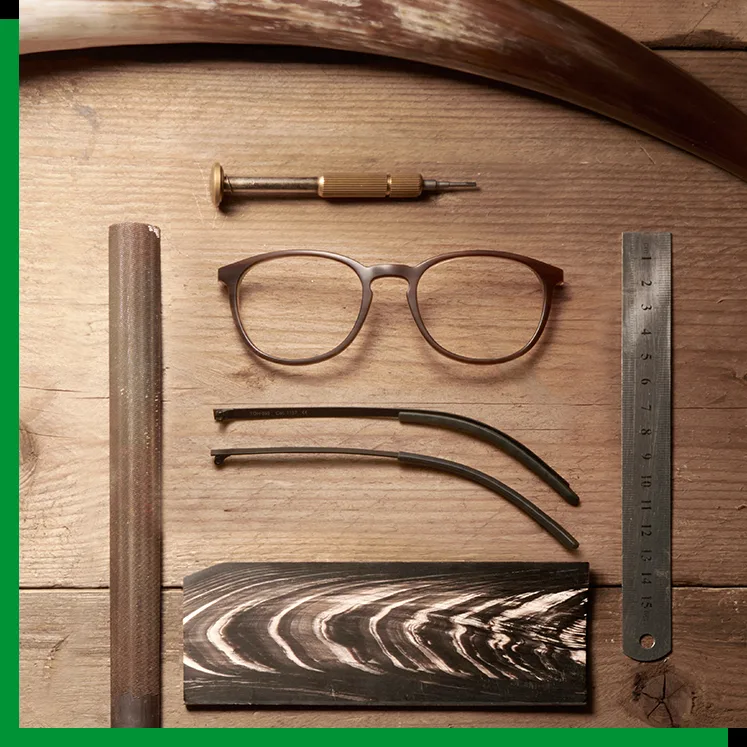
Quality eyewear is built by hand with precision tools and decades of craft knowledge — a world apart from mass-produced fast fashion frames
The Hidden Danger of Cheap Sunglasses
This is the fact that should alarm every sunglass buyer: cheap sunglasses can be worse for your eyes than wearing no sunglasses at all.
Here is why. Dark-tinted lenses cause your pupils to dilate — your eye interprets the tint as dim light and opens wider to let more in. If those dark lenses lack proper UV filtration, your dilated pupils are now absorbing more ultraviolet radiation than they would if you were simply squinting in the sun without sunglasses. The American Academy of Ophthalmology has long warned that cumulative UV exposure is a leading risk factor for cataracts, macular degeneration, and photokeratitis (essentially a sunburn on your cornea).
Cheap sunglasses often advertise "UV protection" in vague terms without specifying UVA and UVB coverage. Quality sunglasses — the kind we fit at The Last Optical from brands like Salt. Optics, Garrett Leight, and Mykita — provide verified UV400 protection, meaning they block 100% of both UVA and UVB rays up to 400 nanometers. That is not a marketing claim; it is a measurable, testable standard.
Materials: What You Are Actually Paying For
The single biggest difference between a $15 pair of glasses and a $400 pair is what they are made of — and how that material performs over years of daily wear.
Cheap frames are typically injection-molded from commodity plastics — polycarbonate or nylon blends that are lightweight but brittle. They crack at the hinges, lose their shape within months, and cannot be adjusted by an optician because the material has no memory. The metal versions use nickel alloys that corrode, cause skin reactions, and fatigue at stress points. When they break — and they will — they are disposable. You cannot repair them.
Quality frames use fundamentally different materials:
Titanium — used by Lindberg, ic! Berlin, and Salt. Optics — is 45% lighter than steel, completely hypoallergenic, and resistant to corrosion. A titanium frame can be bent, twisted, and sat on, and it springs back to its original shape. Lindberg's frames weigh as little as 1.9 grams — you forget you are wearing them.
Japanese acetate — the material of choice for Face à Face, Garrett Leight, and L.A. Eyeworks — is a plant-based plastic derived from cotton fibers and wood pulp. Unlike injection-molded plastic, acetate is cut from solid sheets, hand-polished, and layered to create rich, deep colors that do not peel or fade. It is flexible, durable, and can be adjusted and repaired by a skilled optician for years.
Stainless steel sheet metal — Mykita's signature material — is cut from a single sheet and assembled without screws, creating frames that are virtually indestructible and featherlight.
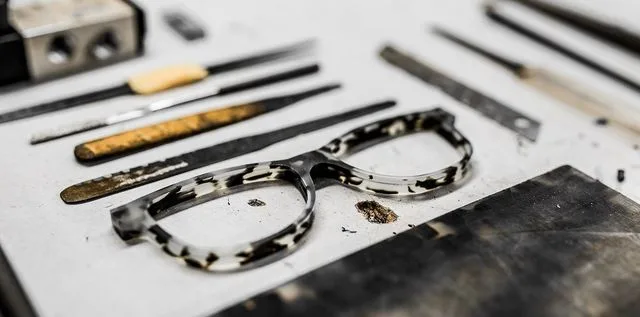
Every quality frame passes through dozens of hands during production — a process that takes weeks, not seconds on an assembly line
The Cost-Per-Wear Math
This is where the investment argument becomes undeniable. Consider two scenarios:
Scenario A: Fast fashion. You buy a $30 pair of sunglasses from a drugstore. They feel fine for three months, then the hinge loosens. By six months, one arm is wobbly. By nine months, they snap. You buy another pair. Over five years, you have spent $150 to $200 on glasses that never fit properly, never protected your eyes adequately, and ended up in a landfill.
Scenario B: Quality investment. You visit The Last Optical, where Stacey fits you in a pair of Garrett Leight frames with premium polarized lenses. The total is $450. Five years later, the frames still look and feel like new. You have had them adjusted twice (free of charge at our eye bar). When your prescription changes, we re-lens the same frames for a fraction of the cost of new glasses. Your cost per year: $90. Your cost per wear, assuming you wear them 300 days a year: 30 cents.
The cheap sunglasses? At $30 every nine months, your cost per wear is roughly the same — but you got none of the UV protection, none of the comfort, none of the style, and none of the durability.
Lens Quality: The Part You Cannot See
Frames get all the attention, but lenses are where quality matters most for your actual vision. Cheap lenses suffer from optical distortion — inconsistencies in the lens surface that cause your eyes to work harder to focus. Over hours of wear, this leads to headaches, eye strain, and fatigue. You might not connect the symptoms to your glasses, but your optician will.
Quality lenses from labs like Shamir, Zeiss, and Essilor are ground to precise optical standards with coatings that cheap lenses simply do not offer: multi-layer anti-reflective coatings that eliminate glare, hydrophobic treatments that repel water and oil, scratch-resistant hardcoats, and blue light filtration for screen use. These coatings are not gimmicks — they are the difference between lenses you tolerate and lenses you forget are there.
At The Last Optical, every pair of prescription glasses includes a consultation with Stacey to determine the right lens design for your lifestyle. A golfer gets different lenses than a graphic designer. A truck driver gets different lenses than a teacher. That level of personalization is impossible at a fast fashion counter or an online retailer that has never seen your face.
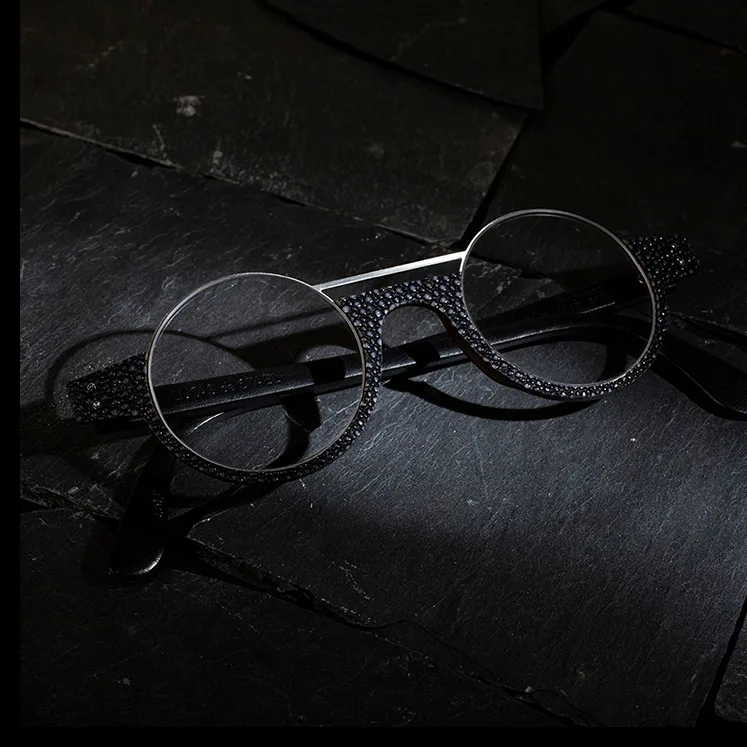
The details tell the story — precision hinges, hand-polished surfaces, and materials that age gracefully instead of falling apart
The Environmental Cost of Disposable Eyewear
There is a sustainability argument here as well. The eyewear industry produces an estimated 4.8 million tons of waste annually, and the vast majority comes from disposable fast fashion frames that end up in landfills within a year. Quality frames are inherently sustainable — they last 5 to 10 times longer, they can be repaired and re-lensed, and many of the brands we carry (Lindberg, Mykita, Lunor) prioritize responsible manufacturing with minimal waste.
When you invest in a pair of frames that lasts a decade, you are not just saving money — you are keeping dozens of cheap frames out of the waste stream.
The Fitting Factor: Why Where You Buy Matters
A quality frame poorly fitted is no better than a cheap frame. This is the part that online retailers and fast fashion outlets cannot replicate. When you sit at the eye bar at The Last Optical, Stacey measures your pupillary distance, your vertex distance, your pantoscopic tilt, and your frame wrap angle. She evaluates your facial anatomy, your lifestyle, and your aesthetic preferences. She adjusts the frame to your face — not the other way around.
That fitting process is what transforms a good frame into a great pair of glasses. It is the reason our patients drive from Newburgh, Middletown, Goshen, Warwick, and across the Hudson Valley. And it is the reason we can confidently say that every pair of glasses that leaves our shop is fitted to last.
Visit The Last Optical
If you have been cycling through cheap glasses and wondering why they never feel right, we invite you to experience the difference. Book a visit to our boutique at 77 Clinton St, Montgomery, NY 12549, or call us at (845) 606-4220. Pull up a seat at the eye bar, and let Stacey show you what quality eyewear actually looks and feels like.
Your eyes are the only pair you will ever get. They deserve better than fast fashion.
Related: Explore our curated collections from the world's finest independent designers, learn about our comprehensive eye exams, or discover how our Dry Eye Spa can restore comfort to tired, irritated eyes.