We slather on sunscreen, wear hats, and seek shade — but most of us forget that our eyes are just as vulnerable to the sun as our skin. According to the American Academy of Ophthalmology, ultraviolet radiation from the sun can damage the eye's surface tissues, cornea, and lens, raising the risk of cataracts, eye cancers, growths on the eye, and even a painful condition called photokeratitis — essentially a sunburn on your cornea. [1]
The World Health Organization estimates that approximately 15 million people worldwide are blind from cataracts, and up to 20 percent of those cases may be caused or significantly worsened by prolonged UV exposure. [2] That is a staggering number for a condition that is largely preventable with proper eye protection.
At The Last Optical, we believe that protecting your eyes should never mean compromising on style or vision quality. That is why we carry the finest prescription sunglasses from designers like Salt. Optics, Garrett Leight, and Mykita — all available in your exact prescription with premium polarized lenses. Here is everything you need to know about summer eye protection.
The Invisible Threat: How UV Radiation Damages Your Eyes
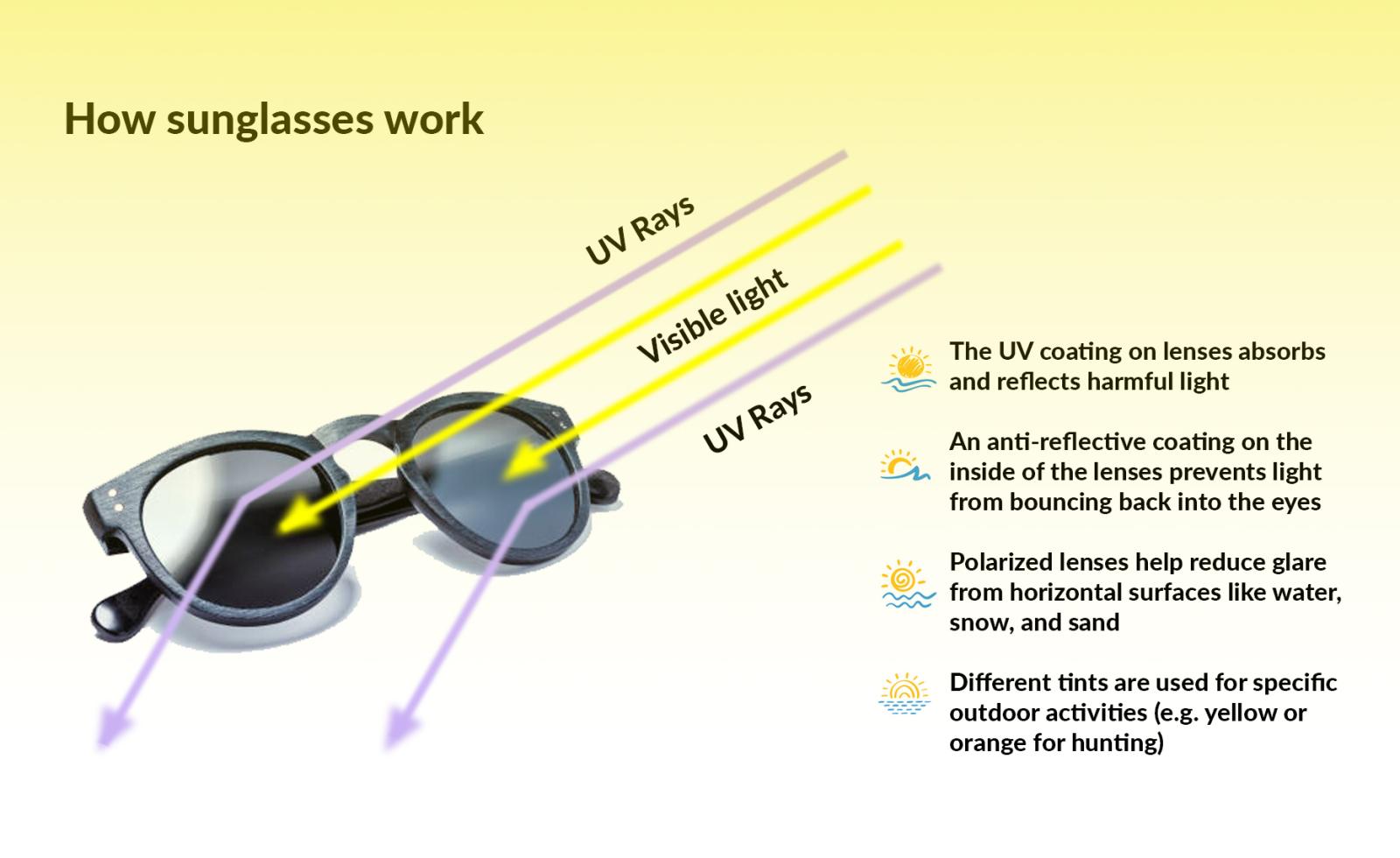
Ultraviolet radiation comes in two forms that reach your eyes: UVA and UVB. UVA rays penetrate deep into the eye, reaching the lens and retina, while UVB rays are absorbed primarily by the cornea and the eye's outer structures. Both contribute to long-term damage, and neither can be seen or felt until the harm is already done. [1]
Dr. Michael Kutryb, a spokesperson for the American Academy of Ophthalmology, puts it plainly: "UV radiation, whether from natural sunlight or indoor artificial rays, can damage the eye's surface tissues as well as the cornea and lens. Unfortunately, many people are unaware of the dangers UV light can pose." [1]
The conditions linked to cumulative UV exposure are serious:
- Cataracts — the leading cause of treatable blindness worldwide. UV exposure clouds and yellows the lens of the eye, causing progressive vision loss. The Skin Cancer Foundation reports that at least 10 percent of all cataract cases are directly attributable to UV exposure. [3]
- Macular degeneration — a major cause of vision loss for people over 60, caused by cumulative UV damage to the retina's central portion. [3]
- Pterygium (surfer's eye) — a fleshy growth on the white of the eye that can extend over the cornea and impair vision. Common in people who spend long hours near water, sand, or snow. [1]
- Photokeratitis — a painful sunburn of the cornea that can cause temporary vision loss, severe pain, and light sensitivity. UChicago Medicine notes that this condition "commonly leads to urgent medical visits because of severe eye pain and an abrupt onset." [4]
- Eyelid skin cancers — basal cell carcinomas make up approximately 90 percent of eyelid skin cancers, with most occurring on the lower lid where sun exposure is greatest. [3]
The most insidious aspect of UV damage is that it is cumulative and irreversible. Every hour spent in the sun without proper eye protection adds to your lifetime risk. This is why the AAO recommends starting UV protection in childhood — the damage begins accumulating from the very first exposure. [1]
Summer's Hidden Multipliers: Why This Season Is the Most Dangerous
Summer is not just about longer days and more time outdoors — it is about dramatically increased UV exposure from multiple angles. The Skin Cancer Foundation warns that 80 percent or more of the sun's rays reflect off water, snow, and sand, effectively hitting your eyes twice: once from above and once from below. [3] That means a day at the beach, on a boat, or by the pool exposes your eyes to nearly double the UV radiation of a typical day.
Several factors compound the risk during summer months:
- Extended outdoor hours — longer days mean more cumulative exposure, especially between 10 AM and 4 PM when UV intensity peaks
- Water and sand reflection — reflective surfaces bounce UV rays upward, bypassing the natural protection of your brow ridge and hat brim
- Altitude — UV intensity increases with elevation, making hiking, mountain biking, and summer travel to higher altitudes particularly risky
- False security from clouds — the AAO emphasizes that clouds do not block UV light. The sun's rays pass through haze and thin cloud cover, meaning overcast days still require full eye protection [1]
- Chlorine and dry eye — pool chemicals and summer heat can irritate and dry out eyes, making them more vulnerable to environmental damage
Polarized Lenses: The Science Behind the Clarity

You have probably heard the term "polarized" on sunglasses labels, but understanding how the technology actually works reveals why it is so much more effective than simple tinting. According to the AAO, polarized lenses contain a special chemical filter that creates vertical openings for light. When sunlight bounces off a flat surface like water, a road, or a car hood, it reflects in concentrated horizontal waves — this is what we experience as glare. Polarized lenses block those horizontal waves while allowing vertical light through, dramatically reducing glare without darkening your overall vision. [5]
The result is not just comfort — it is safety. The AAO notes that polarized lenses "improve vision and safety in the sun" because they eliminate the temporary blindness that reflected glare can cause. [5] Objects appear crisper, colors look more saturated, and details are significantly easier to see. People who fish, boat, drive, or spend time near water report the most dramatic improvement.
There is one critical distinction that many people miss: UV blocking and polarization are not the same thing. A lens can be polarized without offering UV protection, and a UV-blocking lens may not be polarized. The AAO specifically warns consumers to check for both features independently. [5] At The Last Optical, every pair of prescription sunglasses we build includes both 100% UV400 protection and premium polarized lenses — because you should never have to choose between glare reduction and UV safety.
The Dark Lens Danger: Why Cheap Sunglasses Can Be Worse Than None
Here is a fact that surprises most people: dark-tinted sunglasses without UV protection can actually do more harm to your eyes than wearing no sunglasses at all. The reason is physiological — dark lenses cause your pupils to dilate, opening wider to let in more light. If those lenses lack UV filtering, your dilated pupils are now admitting significantly more ultraviolet radiation than they would if you were simply squinting in the sun. [6]
This is why the AAO and the Skin Cancer Foundation both emphasize that the UV rating is the single most important feature of any pair of sunglasses — not the darkness of the tint, not the brand name, and not the price tag. Look for labels that say "UV400" or "100% UV protection" or "blocks both UVA and UVB rays." [1][3]
The problem with mass-market sunglasses — the kind you grab from a gas station rack or a fast-fashion retailer — is that UV claims are often unverified. There is no regulatory body that tests every pair of sunglasses sold in the United States. When you purchase prescription sunglasses from a licensed optician like The Last Optical, the UV protection is built into the lens material itself and verified by the lens manufacturer. It is not a coating that can scratch off or a claim that cannot be substantiated.
Your Summer Eye Protection Checklist
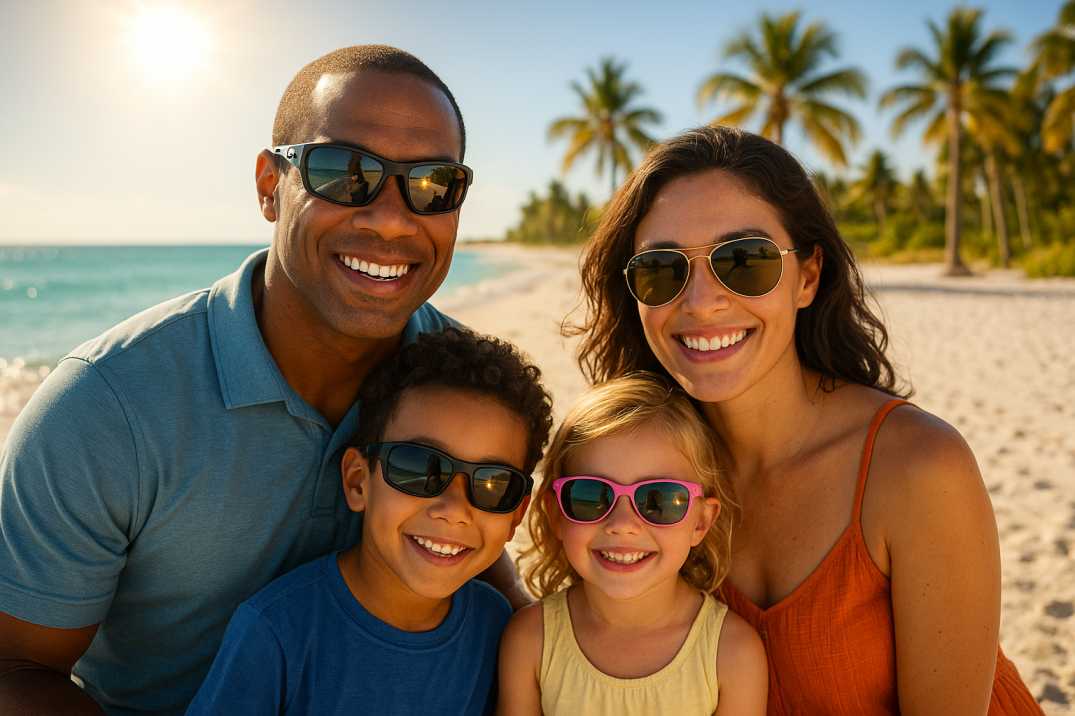
Based on guidance from the AAO, the Skin Cancer Foundation, and the WHO, here is what comprehensive summer eye protection looks like: [1][2][3]
- Wear sunglasses every time you go outside — not just on sunny days. UV rays penetrate clouds, haze, and thin overcast
- Choose 100% UV400 protection — this blocks all UVA and UVB wavelengths up to 400 nanometers
- Add polarized lenses — especially if you spend time near water, on the road, or in any environment with reflective surfaces
- Wear a wide-brimmed hat — the Skin Cancer Foundation recommends at least a three-inch brim, which can block up to half of UV rays reaching your eyes [3]
- Protect children early — children's eyes are more susceptible to UV damage because their lenses are clearer and transmit more UV to the retina. Start the sunglasses habit young
- Consider wraparound styles or large frames — they block UV from entering around the sides of standard frames
- Do not forget about reflected UV — sand, water, concrete, and even grass reflect UV rays upward, bypassing overhead protection
- Get prescription sunglasses — if you need vision correction, switching between regular glasses and clip-on shades is not just inconvenient, it often leaves gaps in UV coverage
Why Prescription Sunglasses from The Last Optical Are Different
At The Last Optical, we do not sell sunglasses as an afterthought. We build them as a precision optical instrument in your exact prescription — with the same care, the same lens quality, and the same frame selection as your primary eyewear. Whether you need single vision, progressives, or a complex prescription with high astigmatism correction, we craft your sunglasses to deliver perfect vision and complete UV protection simultaneously.
Our prescription sunglasses feature:
- Premium polarized lenses with 100% UV400 protection built into the lens material — not a surface coating
- Your exact prescription — including astigmatism, prism, and progressive corrections that off-the-rack sunglasses cannot provide
- Designer frames from brands like Salt. Optics, Garrett Leight, ic! berlin, Mykita, and Face a Face — because eye protection should be as stylish as it is functional
- Anti-reflective back coating — reduces light bouncing off the back surface of the lens into your eyes, a detail that mass-market sunglasses almost never include
- Lens tint options — gray for true color perception, brown for enhanced contrast, green for reduced eye fatigue, and specialty tints for specific activities
If you already wear glasses, prescription sunglasses are not a luxury — they are a necessity. Squinting through the summer without proper sun protection, or relying on clip-ons that leave gaps around the edges, means your eyes are accumulating UV damage every single day. And if you wear contact lenses, remember that contacts provide minimal UV protection and should always be supplemented with quality sunglasses.
The Bottom Line
UV damage to your eyes is cumulative, irreversible, and almost entirely preventable. The science is clear: proper sunglasses with verified UV protection and polarized lenses are not optional summer accessories — they are essential medical protection for one of the most vulnerable organs in your body.
You only get two eyes. Protect them like they matter — because they do.
Ready to see summer clearly? Visit The Last Optical in Montgomery, NY, and let us build you a pair of prescription polarized sunglasses in your exact Rx — from the finest designer frames in the Hudson Valley. Book your visit today.
Sources:
[1] American Academy of Ophthalmology, "The Sun, UV Light and Your Eyes," May 2024. aao.org
[2] World Health Organization, "Ultraviolet radiation" fact sheet, June 2022. who.int
[3] The Skin Cancer Foundation, "Eye Protection," March 2025. skincancer.org
[4] UChicago Medicine, "Can your eyes get sunburned?" August 2023. uchicagomedicine.org
[5] American Academy of Ophthalmology, "What Are Polarized Lenses For?" June 2024. aao.org
[6] American Optometric Association, "Ultraviolet (UV) protection." aoa.org
Protect your eyes this summer with premium polarized lenses from our designer collections. Book an appointment for a personalized sunwear consultation.